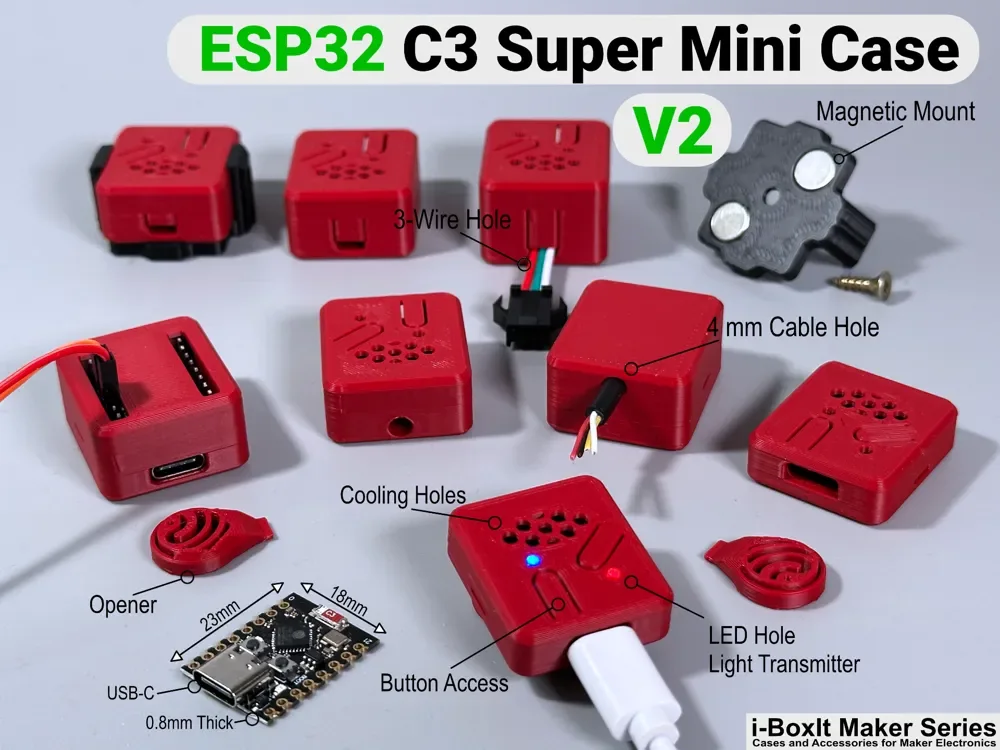
 Design reference photo
Creator photo; included parts are listed below. Accessories not included.
ESP32-C3 SuperMini Project Case
3D printed in PETG for housing a compatible ESP32-C3 SuperMini board.
Shipping within Canada is included in the listed price. Applicable taxes are calculated at checkout. Secure checkout for Canadian shipping addresses. Choose your quantity on Stripe. Shipping to the U.S.? Contact us for a shipping quote before ordering. U.S. shipping is an additional charge.
Check fit before ordering ↓A closer look
3D printed in PETG for housing a compatible ESP32-C3 SuperMini board. Includes one low-profile case body, matching lid and printed opener; optional wall mounts excluded. Electronics, batteries, metal contacts, fasteners, accessories shown and installation are not included.
Check the fit
Start with these details so you can choose the right part for your setup.
- Confirm your board, connector or rack dimensions and mounting-hole pattern before ordering.
What’s included
- One low-profile case body, matching lid and printed opener; optional wall mounts excluded.
- Electronics, batteries, metal contacts, fasteners, accessories shown and installation are not included.
Turn a compact board into a tidier project component
This low-profile case is useful when a compatible ESP32-C3 SuperMini board has moved beyond loose placement on the bench and needs a defined housing. Think about how the board will connect to the rest of the project, where its cable will go and how often you need access. A compact enclosure can simplify handling and organization, but it should be chosen around the actual assembled board. Start with the board version and installed components rather than the processor name alone.
Check the tallest and widest installed features
Measure the board outline and inspect everything extending above, below or beyond it. Headers, solder joints, connector shells and attached wiring can change the clearance required inside a low-profile body. The printed body and lid bounds are approximately 25.3 by 29 mm in plan, with different component heights; those exterior measurements are not usable internal dimensions. Compare the actual board arrangement with the case before ordering. Include photos from the connector end and side to show details a top-down photograph can miss.
Keep development access in the plan
Decide which connections, buttons or indicators must remain reachable after the case is closed. If you are still changing wiring, make access for those changes part of the build sequence. Fit the unpowered board and check cable clearance before completing the enclosure. Route leads so the lid does not press against them or rely on their tension to hold the board in place. The printed opener is part of the set, so keep it with the project's other small parts for later access.
Treat the enclosure as one part of the project
The case supplies a physical housing, while electrical design, power selection and appropriate operating conditions remain part of your electronics build. No weather sealing or electrical protection certification is established here. Choose a location that suits the board and the finished circuit, including its ventilation and cable needs. Before reopening, disconnect the project as appropriate and use the intended opening approach rather than prying against components. If you change to another board version or add tall headers, reassess fit before closing the lid again.
Product questions
What does the listed price include?
One low-profile case body, matching lid and printed opener; optional wall mounts excluded. Shipping within Canada is included in the listed price. Applicable taxes are calculated at checkout. Electronics, batteries, metal contacts, fasteners, accessories shown and installation are not included.
Will this match everything shown in the photo?
The creator photo is a design reference and may show other variants, quantities or accessories. The included-parts list describes exactly what this listing supplies.
Will pre-soldered headers fit inside?
That depends on their height, position and the rest of the board assembly. Supply side measurements and photos of the board as you intend to use it; the low-profile design should not be assumed to clear every header arrangement.
Do the listed case dimensions equal board clearance?
No. They are the outside bounds of separate printed pieces. Wall thickness, engagement features and the installed board arrangement affect the usable space.
What should I keep accessible after assembly?
Consider the actual project's programming connection, controls, indicators and wiring. Check those features with the board unpowered before closing the case so maintenance does not require forcing a cable or lid.
Original design: i-BoxIt — ESP32-C3 SuperMini Case | Options. MakerWorld model 1072508. Original design